


Travelling Thailand with a peanut allergy sounds crazy — but in reality, it was delicious and we will do it again and again and again.
We feasted on street food every single night for three whole weeks, eating incredible, flavour-bursting curries, soups that made our tastebuds explode, and more delicious dishes than we could count without a single allergic reaction.
But it wasn’t necessarily easy. Thai cooking often includes peanuts and Thai people often don’t understand the severity of a food allergy.
Here’s how we survived travelling Thailand with a peanut allergy.
A quick note on our allergy
While I’m lucky enough not to be struck down with a peanut allergy, my partner is.
In short, her personal peanut allergy means:
- She cannot eat peanuts or things made with peanuts
- She carries antihistamines and an Epi-Pen
- We religiously check to see if there are peanuts before eating something
- She can eat food that “may contain traces of peanuts” but not food where peanut is an ingredient
All allergies are different and affect people in different ways. This article is not medical advice but a personal account. As always, check with your doctor if you have concerns about allergies. This article may also contain affiliate links which help fund Gallivantations at no cost to you.
How often does Thai food use peanuts?
Thailand has long been on our bucket list, but it’s a nail-biting item. We long believed that Thai food uses a lot of peanuts, so we were concerned it would be a minefield.
Eventually, we couldn’t hold back. We decided to go to Thailand on the condition that if we found that everything had peanuts, my partner would survive off 7/11 food instead. Drastic, right?
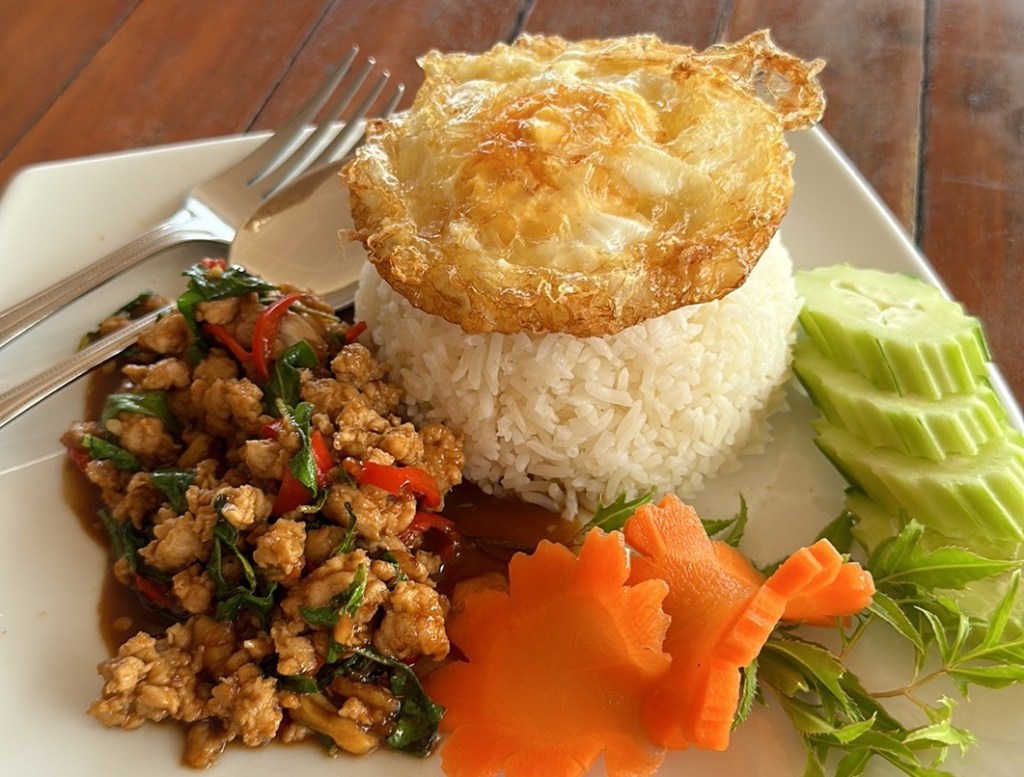
Luckily, once we arrived in Thailand, we found that avoiding peanuts still meant eating a huge amount of delicious Thai food. In fact, more often than not, peanuts were either sprinkled on top of a dish and could be left off the menu, or not included in the dish at all.
Of course, there are some foods that should be avoided (we’re looking at you, satay!) and we had strict rules over when food could be eaten. Here’s what we did.
How to travel Thailand without eating peanuts
Our golden rules for avoiding an allergic reaction to peanuts in Thailand were:
- Always carry allergy pills and an EpiPen
- Always show an allergen card when ordering instead of asking verbally
- Always check again when the food arrives
- Don’t eat anywhere you don’t feel 100 % comfortable
Let’s discuss those in more detail.
1. Always carry allergy pills and an EpiPen
This was a non-negotiable: every time we went out, we took our bum-bag/fanny-pack with her EpiPen and strong anti-histamines (we use Phenergan).
We didn’t allow ourselves to go out without these items. That way, if the worst happened, we had the tools to slow an allergic reaction down while finding medical help.
(A reminder here that if you do have to use your EpiPen, this is only a temporary solution. Use the adrenaline and then seek medical attention ASAP).
2. Always show an allergen card when ordering
We had two double-sided, laminated cards explaining the peanut allergy in Thai. Every single time we ordered something, we showed the card.
We didn’t want to rely on verbal interaction. While many Thai people speak reasonable English, Thai culture uses indirect communication, so the people are unlikely to say if they don’t understand in an effort to keep interactions amiable.
That means if you say “I’m allergic to peanuts,” they might smile and say “Okay, okay” — while having no idea what you said and then serving you a delicious plate of peanuts. Yikes!
Instead, we showed our allergen card that we bought online. This seemed to be mostly understandable. On the odd occasion people didn’t read or understand Thai (like for migrant workers), we used Google Translate on our phone — or followed Rule #3.
3. Always check again when the food arrives
Better safe than sorry, right? I’m sorry to everyone in Thailand for being annoying, but yes — when the food is handed to you or arrives at your table, a quick “No peanut, right?” while pointing at the allergy card will ease your mind.
Of course sometimes the person was confused and took the allergy card again to read it and sometimes this caused slight delays of digging in while being taunted by the tantalising smells rising up from the plate in front of you, but it’s simply a must-do.
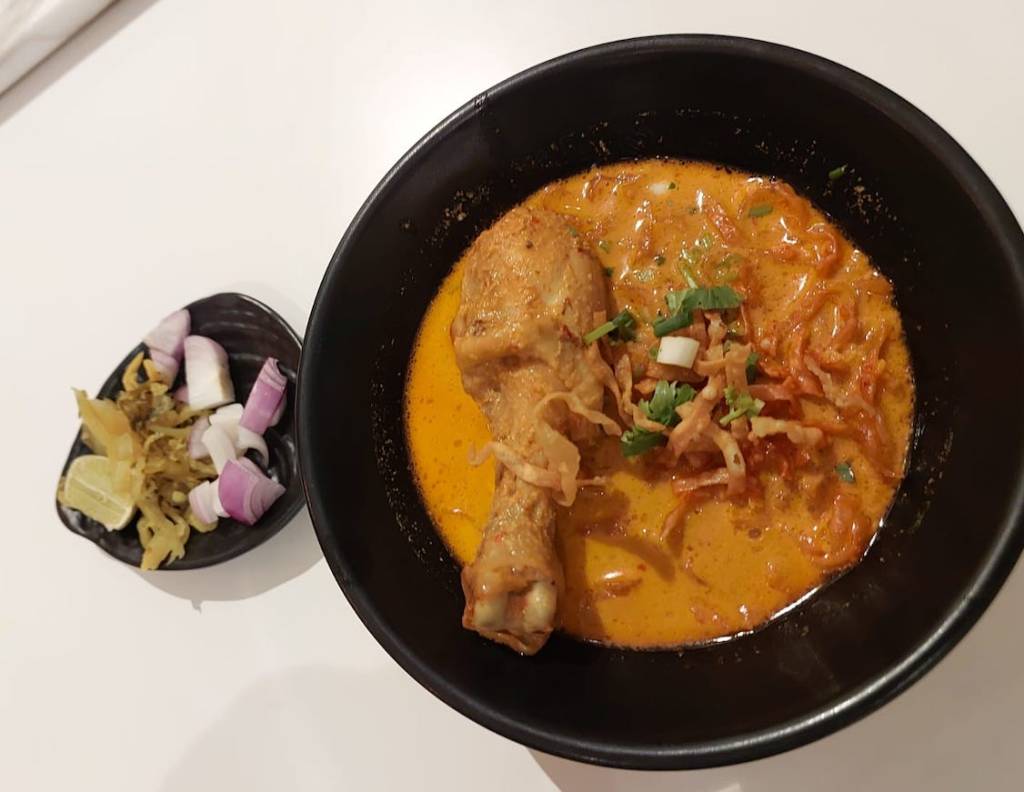
In addition to this, do a quick peanut check of the food yourself. We had one street food stall we ate at in a tourist area where the workers spoke great English, read the allergy card, and confirmed no peanuts in the dish.
Unfortunately, we found one single peanut in our salad from cross-contamination, resulting in taking an pre-emptive allergy pill with, thankfully, no allergic reaction. From then on, we dug through each dish with our forks before chowing down.
4. Don’t eat anywhere you don’t feel 100 % comfortable
This is an easy one. If we got a bad feeling from a place, like they didn’t read the allergy card properly, were umming and ahing, or just didn’t seem confident, we left. It’s not worth the risk.
This only happened to us once, luckily. We were in a pretty touristy restaurant on Koh Phangan and showed them the allergy card. They took it to the kitchen and sent their seven-year-old daughter out to say “No have.” She didn’t mean “the dishes don’t have peanuts” but rather “We don’t have any food here that you can have.”
We were pretty sure that we could have eaten there, but we think that they read the whole card which talks about cross contamination and the chef decided “Better safe than sorry” and sent us away. C’est la vie, no problem! We found a better place up the road and ate peanut-free. ☺️
By following these rules, we safely travelled Thailand with a peanut allergy with only the one tiny incident above.
The confusion with the Thai language and “peanut”
Alright, I’m far from a Thai language expert, so I’ll explain this as best as I can.
In Thai, “peanut” is “T̄hạ̀w lis̄ng” which is pronounced like “too-ah LIS-ong”. Here’s a kind Thai lady who let me record her:
(Feel free to save the recording above and practice the pronunciation!)
Okay, the confusion. “T̄hạ̀w” (the first part of the word peanut) is actually a family of food that includes soy beans, green beans, long beans — you get it, a lot of beans.
This means that often, even when showing our allergy card, they would start checking with us and pointing at beans to see if they were okay to eat. A few times we were even told not to eat soy sauce! Once we explain, “No, only peanut” or even showed a picture of a peanut, it was okay.
Best Thai food to eat for people with peanut allergies
People often think that Thai food is covered in peanuts, but in truth, Thai food in the Western world uses more peanuts than Thai food in Thailand.
Did that make sense? Let me try again: food in Thailand does not use peanut as often as you think. In fact, the only dishes we really ended up avoiding were some specific curries and satay!
Thai food that typically does not contain peanut
Here’s the food we ate most often while still following our rules above. Again, always show your allergy card because you never know if someone has adjusted a recipe.
We successfully regularly ate the following foods on our trip to Thailand:
✅ Red Curry
✅ Green Curry
✅ Yellow Noodles (delish!)
✅ Big fat chew noodles (Pad see ew)
✅ Mango sticky rice
✅ Papaya Salad (order without peanuts)
✅ Glass Noodle Salad
✅ Mango Salad
✅ Tom Yum
✅ Tom Kha Gai
✅ Crab Omelette
✅ Crab Curry
✅ Fried Fish
✅ Morning Glory
✅ Chicken and Basil Stir-Fry
✅ Chicken Cashew Stir-Fry
✅ Pork and Basil Stir-Fry
✅ Roti
Thai food that typically does contain peanut
We avoided the below foods on our trip due to them often containing peanut (this is not an exhaustive list, but includes some of the most common foods we didn’t eat):
❌ Satay
❌ Pad Thai
❌ Massaman curry
❌ Panang curry
A few quick notes on these foods to avoid:
First, technically Pad Thai translates to “fried dish” — it doesn’t have to include peanuts. However, most Pad Thais in Thailand will have peanut sprinkled on top. We went to one tourist Pad Thai bar in Phi Phi and they had no problem removing the peanuts. Still, we avoided this food generally because we knew it was in close proximity to peanuts and didn’t want cross-contamination to occur.
Secondly, from what we were told about Massaman curry and Panang curry, normally peanut is not added in the curry paste stage, but later. However, peanut can be added in the curry paste stage. We avoided all of these curries, even if the people selling it said “no peanut” because sometimes curry paste is sold at markets — so they might not know all the ingredients or understand the severity. Luckily, green and red curry is virtually never made with peanut and we ate a huge amount of these on our trip with no issues.
What about peanut oil?
You might be wondering about cooking oil, specifically peanut oil.
According to Anaphylaxis UK and based on multiple medical studies, refined peanut oil is unlikely to cause an allergic reaction. Even unrefined peanut oil is unlikely to cause a reaction or may cause only a mild reaction.
Because of this, we didn’t ask about peanut oil on our trip and she was completely fine. Of course, everyone’s allergies are different so remember to seek independent medical advice.
Tips for travelling Thailand with a peanut allergy
Travelling Thailand with a peanut allergy is possible, and you won’t even have to survive of McDonalds. Here are some easy tips to keep in mind:
- Create your base rules (see ours above). When will you eat Thai food and when won’t you?
- Always err on the side of caution. Don’t take risks.
- Don’t be afraid to be annoying. Ask someone, ask them again, and ask them a third time if you want.
- Take a food tour and let your guide know about your allergy. This is a great way to experience Thai food with someone who can explain to the vendors in Thai. We loved this street food tour in Bangkok and this Old Town street food tour in Phuket.
- If you’re on a day tour, be extra cautious. Keep in mind how long it could take you to get to a hospital if you need it.
- If needed, take a low dose of antihistamines every day. (We didn’t use this tip, but we saw it recommended elsewhere and thought it could be handy!)
- Always visually check the food to look for cross-contamination.
The final verdict: can you travel Thailand with a peanut allergy?
Yes! Travelling Thailand with a peanut allergy is entirely possible. You’ll need to avoid a few dishes and follow guidelines, but it is entirely possible to explore this stunning (and delicious) country even if you can’t partake in a few peanuts along the way.
Have any questions? Got an experience you would like to share? I’d love to hear from you in the comments below!
 gallivantations
Very reassuring when contemplating a trip to Thailand with my son who has a peanut and hazelnut allergy – thank you!
LikeLike
Thank you so much! I’ve been nervous about an upcoming trip but the list of generally okay/not okay foods is very helpful. Going to get an allergy card right away, too!
LikeLike
Hi,
Firstly, thank you so much for providing this information, it’s very helpful as I will be travelling to Thailand in a few months for the first time and your advice has really put me at ease.
I’ve already been to Malaysia, which arguably uses as many peanuts in their everyday food as Thai food and I managed well with allergen cards, in both Malay, Cantonese and Hokkein.
There was a lot I could not eat, but I stuck mainly with the Chinese and Indian food there and only ate certain Malay foods, as it was a much safer option and still had an amazing eating experience.
I’ve also just found out, you can buy peanut protein rapid testing strips to detect food and surfaces for traces of peanut. They’re very expensive but I am considering buying these for extra safety.
LikeLike
Thank you so much for posting this. We’re traveling to Thailand in a couple of months and my allergy sounds similar to your partner’s, so your advice has put my mind at ease a bit. We have traveled to Malaysia and Indonesia and had a bit of difficulty with street food vendors not understanding (and also telling me no soy sauce!). Favoriting this post to have handy once we’re there. Thanks again!
LikeLike